















ARTIST OF THE MONTH:
Jason Keiser: Balancing Life, Teaching, and a Love for Landscape Art
Art has been a constant thread in Jason Keiser’s life, woven through childhood sketches, bold creative experiments, and the landscapes he brings to life on canvas today. Growing up, Jason’s creative spark was evident in everything he did, from sketching superheroes to designing elaborate forts in the backyard. “Art was always a part of my life,” Jason recalls. “It wasn’t something I had to force—it felt natural.” As he grew older, that natural inclination developed into a full-fledged passion, leading him to pursue art professionally. Today, Jason is a dedicated landscape artist, art teacher, and family man, blending his talents with his love for nature and his commitment to inspiring others.
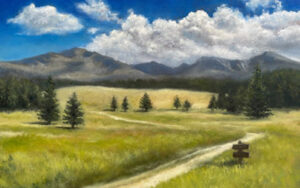
Through his paintings, Jason captures the beauty of the natural world and conveys the sense of peace, wonder, and introspection that comes from being immersed in it. His work is a testament to his belief that art has the power to connect people, not only to the world around them but also to themselves.
The Evolution of an Artist
Jason’s artistic style has transformed over the years, mirroring his personal growth. Early in his career, he gravitated toward surrealist influences, creating pieces filled with elongated forms and dramatic compositions. “I was drawn to the mysterious and the unusual,” Jason explains. “It felt like a way to explore deeper questions about life and identity.”

Over time, his focus shifted to abstract art, where he experimented with bold colors, dynamic shapes, and unconventional materials. “Abstract art taught me to let go of perfection and enjoy the process,” he says. However, it wasn’t until the Covid-19 pandemic that Jason found his true artistic voice. Inspired by the stillness of those months, he began painting landscapes, a shift that felt both timely and deeply personal.
“I’ve always loved being outdoors, but I never thought to bring that into my work,” Jason says. “The pandemic gave me the time and space to explore that, and it was a game-changer.” His landscape paintings quickly became a signature of his style, characterized by rich textures, vibrant colors, and a profound sense of place. From serene forest scenes to rugged mountain vistas, Jason’s work invites viewers to step into a moment of tranquility.
Art, Teaching, and Family Life
Balancing his roles as an artist, teacher, and father is a challenge Jason embraces wholeheartedly. At the high school where he teaches, Jason encourages students to experiment, take risks, and develop their creative voices. “Teaching is about more than technique,” he says. “I aim to help students see the world differently and realize their potential.”
At home, Jason is just as committed to nurturing his family. With three children involved in a flurry of activities, studio time often comes in short bursts. “I’ve learned to make the most of the moments I get,” he says. “Even an hour of painting can be incredibly productive if you’re focused.”
Despite the demands on his time, Jason sees his roles as interconnected. “Teaching and parenting both feed my creativity,” he explains. “They remind me to approach art with curiosity and a sense of wonder.”

Connections and Inspirations
Jason has made many meaningful relationships within the local art community. A close friendship with fellow artist Thomas Zuber has been particularly influential. “Thomas and I have very different styles, but we share many of the same values when it comes to art,” Jason says. “He’s someone I can always turn to for honest feedback or fresh ideas.”
Travel has also played a significant role in shaping Jason’s work. Trips to the Rocky Mountains and other natural wonders have left him in awe of the world’s beauty and eager to translate those experiences onto canvas. “When you’re standing in the middle of a place like Rocky Mountain National Park, you feel so small yet so connected,” he reflects. “That’s the feeling I try to capture in my paintings.”
Looking ahead, Jason hopes to incorporate even more travel into his creative process. From Utah’s dramatic red rock formations to Alaska’s untouched wilderness, his bucket list is filled with destinations that promise endless inspiration.
Looking Ahead
As Jason continues to grow as an artist, he’s embracing new challenges and opportunities. One of his goals is to dive deeper into plein-air painting, which involves creating art on location. “There’s something magical about painting outside,” Jason says. “You see colors, shadows, and textures you’d never notice in a photo.”
Another aspiration is to pursue an artist residency with the National Parks Foundation, allowing him to immerse himself in the landscapes that inspire him most. “I want to keep pushing myself,” he says. “The more you step out of your comfort zone, the more you grow.”
Support Jason’s Work
Jason’s art is a celebration of the natural world, offering viewers a moment of peace and introspection in a fast-paced world. To explore his work, follow him on Instagram @jasonkeiserart or visit his website, jasonkeiser.com to browse his latest pieces, learn more about his process, and stay updated on upcoming shows and projects.

For Jason Keiser, art is a way of life. Through his landscapes, teaching, and connections with others, he inspires a sense of wonder and creativity in everyone he meets.


Written by Eleni Owens / Photos provided by Ariana, Alice & Jason Keiser